
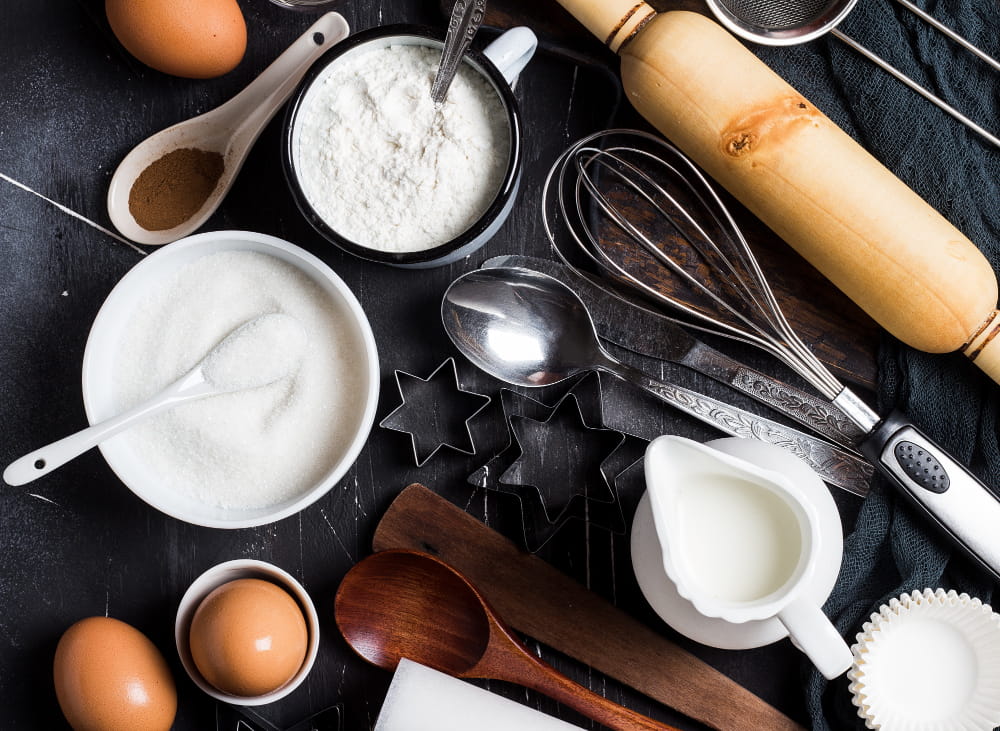
Let’s be honest. You walk into a kitchen shop, or you scroll through Amazon for five minutes, and suddenly you’re convinced you need a stand mixer, a silicon mat, a marble rolling pin, a pastry wheel, a zester, a thermometer, three different spatulas and a tiered cooling rack before you can even think about making a simple cake.
That’s just not true. And frankly, most of that stuff will sit in a drawer for years.
I’ve been baking at home long enough to know that the difference between a good result and a frustrating one rarely comes down to equipment. It comes down to having the right basics – and knowing which ones you actually can’t skip. If you want to go deeper on the craft side, sites like patisseriechambouvet.fr are great for understanding the techniques behind the tools.
The Non-Negotiables (Really, Don’t Skip These)
A decent kitchen scale. This is the one I’d argue about the most. Baking isn’t cooking – you can’t just eyeball flour or sugar and expect consistent results. A basic digital scale, nothing fancy, under £15, changes everything. Seriously. If you’re still using cups and spoons for pastry, that’s probably why things go wrong sometimes.
A mixing bowl. A big one. Sounds obvious, right ? But I’ve made the mistake of using one that’s too small and ended up with flour on the counter, egg on my sleeve, and a bad mood. Get one that feels too big. You’ll thank yourself.
A whisk and a wooden spoon. That’s it. You don’t need electric beaters to start. A good whisk works for most things – batters, creams, sauces. The wooden spoon is for folding, stirring, everything else. These two together handle 80% of what home baking asks of you.
A standard oven tin or cake mould. One round, one rectangular. Don’t overcomplicate it. I’d go for a loose-bottomed tin if possible – getting a cake out cleanly is one of those small joys that genuinely matters.
The Stuff That’s Nice to Have (But Not Urgent)
A hand mixer. Useful ? Yes. Essential ? Not at the start. If you’re making meringues regularly or you want to whip cream in under two minutes, then yes, it earns its place. But for occasional baking, a strong arm and a whisk will do fine.
A rolling pin. If you want to make shortcrust pastry, tarts, biscuits – then yes, grab one. A wooden one around 40cm long is more than enough. You don’t need the marble version unless you specifically prefer cold surfaces for butter-heavy doughs. Maybe. I’m not entirely convinced it makes a huge difference at home level.
A pastry brush. Small, cheap, genuinely useful. Glazing, buttering tins, brushing sugar syrup. One of those tools that costs £3 and punches above its weight.
A sieve. Not glamorous. But sifting flour does make a real difference in texture – lighter cakes, smoother batters. If you’re serious about pastry, get one. If you’re making a banana bread on Sunday afternoon, probably fine to skip it.
What You Really Don’t Need (At Least Not Yet)
A stand mixer. There, I said it. It’s beautiful, it’s satisfying to use, and if you bake twice a week it absolutely makes sense. But if you’re just starting out, or if you bake occasionally ? It’s a £300–£500 purchase that mostly lives on the counter and collects dust. Wait until you know you’ll actually use it.
Specialist moulds. Bundt tins, tarte tatin dishes, financier moulds – all fun, all specific. Buy them when a recipe genuinely requires it, not before. I’ve bought things “just in case” and used them once. The tarte tatin dish is still in its box, three years later.
Multiple sizes of everything. You don’t need four different spatulas. One flexible silicone spatula does the job. Same with bowls – two or three different sizes covers everything you’ll realistically make.
A Practical Starter List (If You’re Starting From Scratch)
If someone asked me what to buy to get started properly – without wasting money – here’s where I’d land :
Digital kitchen scale – under £20, non-negotiable.
Two mixing bowls (one large, one medium).
A whisk and a wooden spoon.
One round cake tin (20cm, loose-bottomed).
A hand mixer – optional but useful, around £25–£40 for a basic model.
A silicone spatula.
Baking paper – not a tool, but easy to forget and genuinely useful every single time.
That’s it. That’s a real starting kit. Under £80 if you shop sensibly, and it covers probably 90% of standard home pastry recipes.
One Last Thing
The temptation to buy more before you’ve mastered the basics is real – I’ve felt it. But good pastry is almost always about technique and good ingredients, not about the equipment. A beautiful croissant doesn’t come from a £600 stand mixer. It comes from patience, practice, and decent butter.
Start simple. Buy what you actually need. Add things as you find the gaps.
That’s the honest guide.